All Categories
Featured

Table of Contents
- – A Professional Summary Of Maryland Solar Panel ...
- – The Role Of The $750/kW Rebate, Up To $7,500, ...
- – Why You Might Require The 10 kW Recommended Sy...
- – Making The Right Decision For Maryland Solar P...
- – What You Should Look For In A Roof Before Sche...
- – Effectively Managing Permit Documentation And ...
A Professional Summary Of Maryland Solar Panel Installation Companies
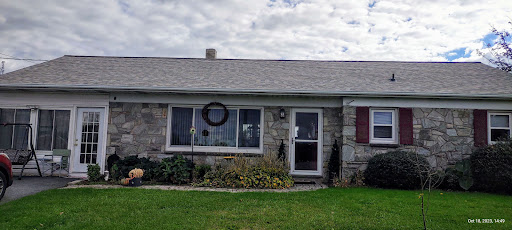
When you begin exploring Maryland Solar Panel Installation Companies, you face a intricate set of financial and technical trade-offs that dictate the long-term sustainability of your investment. Because a standard residential system in this region typically ranges from $31,075 to $42,043 before incentives, choosing the right partner requires a careful balance between equipment quality, warranty terms, and local expertise. Understanding How to choose among Maryland solar panel installation companies involves evaluating how different firms handle regional permitting, preservation zone compliance, and the integration of grid crediting. You must evaluate the benefits of different financing structures against your specific household energy demands, which often require a 10 kW system to attain optimal performance. By evaluating the operational advantages and service models of these professionals, you will attain the clarity needed to determine which option corresponds with your financial goals and property constraints.
“Roof suitability: Not all roofs are suitable for solar panel installation.” — Lumina Solar
The Role Of The $750/kW Rebate, Up To $7,500, In Stimulating Maryland Solar Panel Installation Demand.
The State Solar Program offers a $750/kW rebate, up to $7,500, which significantly alters the financial landscape when you evaluate Who are the top Maryland solar panel installation companies? These financial incentives are designed to lower the barrier to entry, but they require careful coordination between the homeowner and the solar firm to guarantee all eligibility criteria are met.
“SB 783 – Brighter Tomorrow Act: Small Solar Energy Generating System Incentive Program.” — facebook.com
To maximize your return on investment, you must balance these immediate financial offsets against the long-term performance of your system. Grasping the accessible state and federal mechanisms enables you to evaluate how different firms organize their installation estimates to include these savings.
| Incentive Type | Financial Benefit |
|---|---|
| Federal Investment Tax Credit | 30% of complete installation costs |
| Battery Storage Tax Credit | 30% of price, $5,000 cap |
| Sales Tax Exemption | 6% off equipment and labor |
| Property Tax Exemption | Excludes added home value from assessment |
| Maryland Solar Access Program | $750 per kW, to a maximum of $7,500 |
While these incentives provide substantial relief, they often come with particular filing requirements or income thresholds that may affect which technology or hardware an vendor recommends for your property. Confirm whether your chosen solar company has direct experience processing the specific paperwork required for the State Solar Program prior to signing a contract.
When evaluating PV installation, you must weigh the upfront solar panel price in Maryland, which typically ranges from $31,075 to $42,043, against long-term financial advantages like the ITC, excess energy credit, and the prospect for renewable certificate income. You should contact solar power in Maryland before comparing each price quote to validate the solar firm credentials, ensure your roof viability satisfies local requirements, and navigate the intricacies of Maryland solar permits or restrictive solar HOA rules in a heritage district. Choosing between a power purchase agreement and direct ownership depends on whether you emphasize immediate cost savings or the accelerated solar payback period of 8 to 11 years, while also considering how the State Solar Program or tax exclusion might optimize your overall solar ROI.
Why You Might Require The 10 kW Recommended System Size For Maryland Solar Panel Installation
A 10 kW recommended system size constitutes the ideal capacity for most households to offset above-average local energy requirements effectively. While a 7 kW system serves as a common baseline configuration for smaller footprints, scaling up to 10 kW ensures that the solar panel installation provides sufficient output to meet high consumption patterns common in the region. When determining How to choose among Maryland solar panel installation companies, you must prioritize those that conduct a thorough load analysis rather than simply resorting to a standard size.
System sizing involves balancing your physical roof space against your actual historical energy consumption. The subsequent table illustrates the trade-offs between these two common sizing tiers:
| Feature | 7 kW Baseline System | 10 kW Recommended System |
|---|---|---|
| Primary Application | Low-to-moderate energy users | High-demand households |
| Roof Footprint | Smaller, more flexible | Requires significant surface area |
| Upfront Cost | Lower entry point | Higher total capital investment |
| Energy Offset | Partial coverage | Comprehensive coverage |
Selecting an undersized system may fail to maximize your long-term savings, while an oversized system might lead to diminishing returns if your utility provider limits net metering credits for generation that vastly exceeds your annual usage. Always review your last twelve months of utility statements to ensure the suggested system capacity aligns exactly with your verified kilowatt-hour consumption rather than a standard estimate.
Making The Right Decision For Maryland Solar Panel Installation Based On Financing
Selecting among Maryland Solar Panel Installation Companies requires you to evaluate how different payment structures affect your long-term ownership and access to financial incentives. Your choice of financing determines whether you retain control over the equipment and the consequent tax benefits, or if you trade those benefits for lower upfront capital needs.
“Maryland law provides a 100% exemption to property tax for solar energy property or residential wind equipment.” — solarreviews.com
| Option | Ownership | Incentive Eligibility | Upfront Cost |
|---|---|---|---|
| Cash Purchase | Homeowner | Full | High |
| Solar Loan | Homeowner | Full | Low to Moderate |
| Lease | Third-party | None | Zero to Low |
| Power Purchase Agreement | Third-party | None | Zero |
When you evaluate who are the top Maryland Solar Panel Installation Companies, consider that cash purchases provide the highest long-term return by eliminating interest and maximizing the utility of the federal tax incentive. Conversely, solar loans permit you to retain cash flow while yet maintaining ownership of the system and its associated solar renewable energy certificates. If you opt for a lease or a solar service agreement, you evade maintenance responsibilities and upfront costs, but you forfeit rights to the federal tax incentive and other state-specific incentives.
Compare the annual percentage rates of specialized solar loans against the potential loss of tax-advantaged savings to determine if a debt-based or equity-based approach suits your household budget.
What You Should Look For In A Roof Before Scheduling Your Maryland Solar Panel Installation
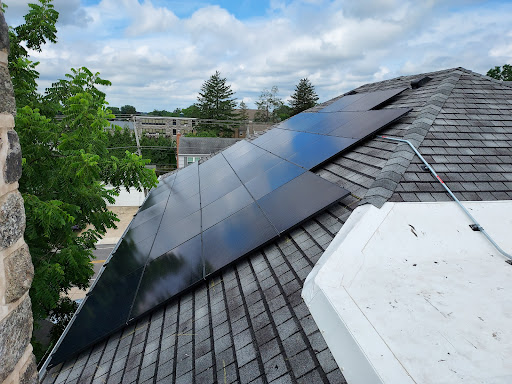
Roof suitability is the main technical factor of system performance, defined by the physical soundness of your mounting surface and its capacity to receive consistent, unobstructed sunlight. When Finding a reliable Maryland solar panel installation company, you must emphasize a thorough evaluation of your roof's condition, as the long-term performance of your array depends entirely on the positioning and integrity of the underlying structure.
“The Solar PV arrays associated with these structures are limited to 150 feet by 150 feet (no greater than 150 feet along either axis).” — baltimorecountymd.gov
Before committing to an installation, you must evaluate several environmental and structural variables that influence how much electricity your panels can produce. These factors dictate not only the potential output of your system but also whether you will incur additional costs for roof reinforcement or tree trimming before the installation process.
| Factor | Impact on Performance |
|---|---|
| Roof Orientation | South-facing surfaces typically yield the highest energy output in this region. |
| Shading Obstructions | Adjacent trees, chimneys, or neighboring structures substantially reduce output via voltage drops. |
| Remaining Lifespan | Systems should optimally be installed on roofs with at least 10 to 15 years of remaining service life. |
| Structural Integrity | The roof must be able to supporting the total weight of racks and high-efficiency panels. |
If your roof requires fixing, these must be addressed before the panels are mounted to prevent the need for costly system removal and reinstallation later. Evaluate the age and material of your roofing shingles to determine if a replacement is required to match the 25-year expected lifespan of your solar hardware.
Review the particular warranty conditions provided by your provider to confirm they cover potential roof-leak repairs resulting from the mounting hardware penetration.
Effectively Managing Permit Documentation And HOA Guidelines For Maryland Solar Panel Installation
Maryland solar panel installation companies and what they offer incorporate the vital service of managing local permitting requirements, homeowners association (HOA) rules, and preservation zone restrictions that differ significantly by municipality. These entities serve as the primary liaison between your property and local regulatory bodies, ensuring that your array meets all statutory mandates before construction begins.
“A restriction is unreasonable if it increases installation cost by at least 5% over the initially proposed installation or reduces projected energy generation by at least 10%.” — marylandreporter.com
Regulatory hurdles often dictate the technical layout of your system, particularly in protected areas. When operating with an installer, consider how the following factors impact the feasibility of your project:
- Municipal Permitting: Each local jurisdiction maintains unique building code definitions that govern electrical and structural safety standards for PV installation.
- HOA Oversight: Many associations enforce aesthetic guidelines regarding panel visibility, color, and mounting height, which can restrict the placement of arrays on street-facing roof planes.
- Preservation Zone Mandates: Properties located in a Heritage District often require additional approval from a local preservation commission, which frequently requires the use of low-profile hardware or limits installations to rear-facing roof areas.
Handling these requirements is a crucial part of the process, as failing to obtain proper documentation can lead to significant delays or mandatory system modifications. Before executing a contract, ensure that your chosen vendor offers a written warranty that they will manage all permit applications and commission appearances on your behalf.
Examine your property deed and municipal maps to verify if your home sits within a prohibited zone before seeking an price quote.

Table of Contents
- – A Professional Summary Of Maryland Solar Panel ...
- – The Role Of The $750/kW Rebate, Up To $7,500, ...
- – Why You Might Require The 10 kW Recommended Sy...
- – Making The Right Decision For Maryland Solar P...
- – What You Should Look For In A Roof Before Sche...
- – Effectively Managing Permit Documentation And ...
Latest Posts
How To Assess Virginia Solar Panel Installation Companies For Quality
Maximizing Your Home ROI With Washington DC Solar Panel Installation Companies
How Do You Evaluate Maryland Solar Panel Installation Companies For Your Home?
More
Latest Posts
How To Assess Virginia Solar Panel Installation Companies For Quality
Maximizing Your Home ROI With Washington DC Solar Panel Installation Companies
How Do You Evaluate Maryland Solar Panel Installation Companies For Your Home?